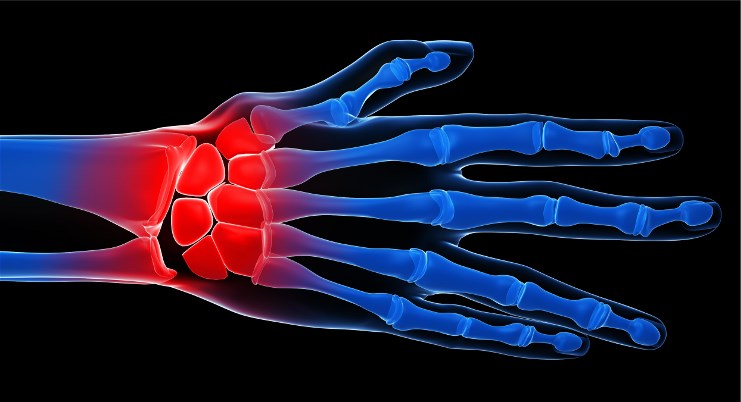
류마티스는 전문의사 치료를 받으셔야 합니다. 아래 내용을 참고만 하세요.다이어트: 관절염 치료의 유일한 희망 (구글 전문번역)
다이어트: 관절염에 대한 유일한 진정한 희망
한 치과의사는 "1994년 4월 그랜드 래피즈에서 열린 미시간 치과 협회 연례 회의에서 당신을 잠깐 만났습니다.
관절염. Bryan은 매일 35mg의 프레드니손(강력한 스테로이드)과 1200mg의 Advil을 복용했습니다. 그는 너무 아파서 밤낮으로 비명을 지르고 울었습니다. 1년 동안 그는 살이 빠졌고 하나도 자라지 않았다
인치. 그의 혈액 검사는 40 이상의 진정률을 반영했습니다(이는 염증의 심각도를 측정한 것으로 5 미만이어야 합니다). 그날 당신이 나에게 준 제안은 모든 동물을 제거하도록 이끌었습니다.
그의 식단에서 얻은 제품과 정제된 탄수화물."
"6개월 이내에 우리는 Bryan이 그의 모든 약물을 중단했습니다. 그는 통증이 없고 체중이 증가하고 다시 성장했습니다. 그의 마지막 혈액 검사는 진정률 1로 훌륭했습니다. 믿을 수 있겠습니까!"
그것이 얼마나 나빠질 수 있는지입니다. 그러나 수백만 명의 관절염은 훨씬 더 미묘합니다. Marvin Burk(Louise의 남편-Louise는 McDougall Health Center 사무실에서 일함)는 거의 의자에서 일어날 수 없었습니다. 그런 다음 그는
그는 관절을 움직일 수 있을 만큼 충분히 풀릴 때까지 다리를 벌리고 방을 반쯤 가로질러 걸었습니다. 그의 손은 너무 뻣뻣해서 도구를 사용할 수 없었고 물건을 자주 떨어뜨렸습니다. 그는 생각했다
65세의 남자는 그렇게 절름발이가 되어서는 안 되고 낫기 위해 필요한 모든 것을 하기로 결정했습니다. 그는 8년 전에 식단을 바꾸었고 즉각적이고 극적인 결과를 얻었습니다. 이제 그는 의자에서 벌떡 일어나 조금도 움직이지 않고 걷는다.
뻣뻣함이나 통증이 없고 문제 없이 도구를 다룹니다. 우리 중 많은 사람들이 마빈의 문제에 공감할 수 있습니다.
사람들의 가장 흔한 고통
근육과 뼈의 질병은 인간의 모든 질병 중에서 가장 흔한 질병에 속하며, 모든 연령대에 영향을 미치지만 해가 갈수록 더 널리 퍼집니다. 정부 조사에 따르면 미국에서
성인의 약 33%는 현재 붓기, 운동 제한 또는 통증의 증상을 동반하는 골치아픈 관절염을 앓고 있습니다. 65세 이상 인구의 약 절반이 관절염을 앓고 있다고 보고합니다. 그만큼
가장 영향을 받는 신체 부위는 목, 허리, 엉덩이 및 어깨입니다.
관절염은 관절의 염증을 의미합니다. 그 이상도 그 이하도 아닙니다. 사람에게 관절염이 있다는 사실은 원인이나 치료법에 대해 아무 것도 알려주지 않습니다. 걸려 넘어지는 등의 부상으로 인해 관절에 염증이 생길 수 있습니다.
그리고 발목을 삔다. 외상성 관절염이라고 합니다. 관절은 박테리아에 감염되어 화농성 관절염을 유발할 수 있습니다. 요산 결정이 관절에 축적되어 통풍성 관절염을 유발할 수 있습니다. 그만큼
이 세 가지 형태의 관절염의 원인은 모두 알려져 있으며 일단 원인이 중단되면 관절이 치유됩니다. 불행하게도, 대부분의 관절염 형태는 "알려진 원인이 없다"고 의사가 말합니다. 그리고
그들이 그것을 인정하든 안 하든, 현대 약물 요법에서도 찾을 수 있는 치료법은 없습니다.
DEGENERATIVE AND INFLAMMATORY (퇴행성형)
"원인을 알 수 없는" 관절염은 크게 두 가지 범주인 퇴행성 관절염과 염증성 관절염으로 나눌 수 있습니다. 퇴행성 관절염은 가장 일반적으로 알려진 상태를 나타냅니다.
골관절염으로. 이것은 서구 문명에 사는 사람들에게서 발견되는 가장 흔한 관절염으로 65세 이상의 사람들의 70% 이상이 손의 엑스레이에서 볼 수 있습니다. 그러나 이 같은 질병은
사람들이 생존을 위해 육체적 노동을 하는 아프리카와 아시아 국가에서는 비교적 드물다(Br J Rheumatol 24:321, 1985).
어떻게 그렇게 될수 있니? 골관절염은 관절이 닳아서 생긴다고 하는데, 왜 후진국의 열심히 일하는 사람들 사이에서 덜 흔할까요? 가벼운 사용으로 이유를 설명하지도 않습니다.
여성의 손은 나이가 들면서 종종 뒤틀리고 변형됩니다.
관절염의 염증 형태에는 소아 류마티스 관절염, 류마티스 관절염, 건선성 관절염, 루푸스 및 강직성 척추염이 포함됩니다. 이러한 공격적인 질병은 다음 중 5% 미만에 영향을 미칩니다.
오늘날 미국에 살고 있는 사람들. 이러한 염증성 질환을 류마티스나 루푸스와 같은 다른 이름으로 분류하는 것은 환자에게 더 이상의 이점을 제공하지 않습니다.
염증의 원인을 더 잘 이해하거나 질병을 성공적으로 치료할 수 있습니다.
퇴행성 관절염(골관절염) 진단을 받은 사람들은 장기간 지속되는 손상(퇴화) 외에도 관절에 염증이 있습니다. 이 염증은 종종 변화로 멈출 수 있습니다.
식이 요법과 붓기, 통증 및 뻣뻣함이 완화됩니다. 어떤 형태의 관절염에서도 변하지 않는 것은 수년간의 질병으로 인해 기형, 경직 및 통증을 남기는 영구적인 파괴입니다. 이해하다
관절염이 있는 대부분의 사람들이 건강한 식단으로 어떻게 도움을 받을 수 있는지에 대해서는 보다 공격적인 염증성 형태의 관절염에 초점을 맞추겠습니다.
관절염 환자들에 대한 희망
관절염은 유전병이 아니며 나이가 들면서 피할 수 없는 부분도 아닙니다. 이러한 관절 질환에는 원인이 있으며 우리의 환경에 있습니다.
Diet: The Only Real Hope for Arthritis
A dentist writes, "In April of 1994 I met you briefly at the Michigan Dental Association Annual Meeting in Grand Rapids. During this seminar, I asked you about my 4-year-old son having juvenile rheumatoid arthritis. Bryan was on 35 mg of prednisone (a powerful steroid) and 1200 mg of Advil daily. He was in so much pain he screamed and cried day and night. In one year he lost weight and did not grow one inch. His blood work reflected a sed rate of over 40 (This is a measurement of severity of inflammation and should be below 5). The suggestions you gave me that day lead me to remove all animal products from his diet, as well as refined carbohydrates."
"Within six months, we had Bryan off all his medication. He was free of pain, gaining weight and growing again. His last blood work was superb with a sed rate of 1 - can you believe it!"
That's how bad it can get. But for millions arthritis is much more subtle. Marvin Burk (Louise's husband--Louise works in the McDougall Health Center office) couldn't hardly get out of the chair. Then he would walk straddle-legged halfway across the room until he could loosen up enough to get his joints moving. His hands were so stiff he could not use his tools and he often dropped things. He figured a man of 65 shouldn't be so crippled and decided he'd do whatever it takes to get well. He changed his diet 8 years ago with immediate and dramatic results. Now he pops out of the chair, walks without a bit of stiffness or pain and he handles his tools with no trouble. Many of us can relate to Marvin's troubles.
PEOPLE'S MOST COMMON AFFLICTION
Diseases of the muscles and bones are among the most common of all human afflictions, affecting all ages, but becoming more prevalent with years. Government surveys indicate in the United States approximately 33% of adults currently suffer from troublesome arthritis with symptoms of swelling, limitation of motion, or pain. Approximately half of all people over 65 years report having arthritis. The regions of the body most affected are the neck, lower back, hip and shoulder.
Arthritis means inflammation of a joint--no more, no less. The fact that a person has arthritis tells nothing about the cause or the cure. Joints can be inflamed as a result of an injury, such as from tripping and spraining an ankle. That's called traumatic arthritis. Joints can be infected with bacteria resulting insuppurative arthritis. Uric acid crystals can accumulate in the joints causing gouty arthritis. The causes of all three of these forms of arthritis are known and once the causes are stopped the joints heal. Unfortunately, most forms of arthritis are said by doctors to have "no known cause." And whether or not they will admit it, there is no cure to be found in modern drug therapy either.
DEGENERATIVE AND INFLAMMATORY (퇴행성과 염증성)
Arthritis of "no known cause" can be divided into two broad categories: degenerative arthritis and inflammatory arthritis. Degenerative arthritis most commonly represents a condition known as osteoarthritis. This is the most common arthritis found in people living in Western civilizations--seen in x-rays of the hands of over 70% of people 65 years and older. However, this same disease is comparatively rare in African and Asian countries, where people physically labor to survive (Br J Rheumatol 24:321, 1985).
How can that be? Osteoarthritis is said to be due to wear and tear on the joints, so why is it less common among hard working people of underdeveloped countries? Nor does it explain why with light use, the hands of women often become twisted and deformed with age.
The inflammatory forms of arthritis include juvenile rheumatoid arthritis, rheumatoid arthritis, psoriatic arthritis, lupus, and ankylosing spondylitis. These aggressive diseases affect less than 5% of the people living in the United States today. Classifying these inflammatory diseases by different names, such as rheumatoid or lupus provides no further benefits to the patient, because it does not lead to better understanding of the cause of the inflammation, or to the successful treatment of the disease.
People diagnosed with degenerative arthritis (osteoarthritis) have inflammation in their joints in addition to the long-standing damage (degeneration). This inflammation can often be stopped with a change in diet and the swelling, pain, and stiffness relieved. What won't change in either form of arthritis is the permanent destruction left by years of disease, leaving deformity, stiffness and pain. To understand how most people with arthritis can be helped by a healthy diet, I will focus on the more aggressive inflammatory forms of arthritis.
HOPE FOR ARTHRITIS SUFFERERS
Arthritis is not a genetic disease, nor is it an inevitable part of growing older--there are causes for these joint afflictions, and they lie in our environment--our closest contact with our environment is our food. Some researchers believe rheumatoid arthritis did not exist anywhere in the world before 1800 (Arthritis Rheum 34:248, 1991). It is well documented that these forms of arthritis were once rare to nonexistent in rural populations of Asia and Africa (Chung Hua Nei Ko Tsa Chih 34:79, 1995; Arthritis Rheum 34:248, 1991). As recently as 1957, no case of rheumatoid arthritis could be found in Africa. That was a time when people in Africa followed diets based on grains and vegetables.
These once unknown joint diseases are now becoming common as people migrate to wealthier nations or move to the big cities in their native countries. With these changes they abandoned their traditional diets of grains and vegetables for meat, dairy products, and highly processed foods (J Rheumatol 19:2, 1992; Ann Rheum Dis 49:400, 1991). For example, although unknown in Africa before 1960, African-Americans lead in the incidence of lupus in the US (J Am Med Women's Assoc 1998;53(1):9-12). The mechanisms by which an unhealthy diet causes inflammatory arthritis are complex and poorly understood, but involve our intestine and immune system.
INTESTINE AND IMMUNE SYSTEM
Increased Intestional Permeability
The intestine forms an effective barrier to separate and exclude intestinal contents from the interior of the body. Only a single layer separates the individual from enormous amounts of antigens(foreign proteins) both of dietary and microbial origin. The intestinal mucosa absorbs and digests nutrients, turning large complex molecules into small simple ones. Normally, only the small molecules are allowed to pass through the intestinal wall, while the large ones that can act as antigens, causing immune reactions, have a limited ability to pass through. Infections and toxins can cause gaps in this barrier and allow large molecules to pass into the blood. This condition of increased intestional permeability is referred to as a "leaky gut." Patients with inflammatory arthritis have been shown to have inflammation of the intestinal tract resulting in increased permeability (Baillieres Clin Rheumatol 10:147, 1996).
The largest amount of lymphoid tissue in the body is associated with the gut. This tissue protects the body from antigens that do get through the intestinal barrier. Unfortunately, an unhealthy diet--too high in fat, cholesterol, and animal protein--can compromise the capacities of the lymphoid tissue to destroy invading antigens that make it through the intestional wall.
Fasting is known to decrease intestinal permeability, thus making the gut "less leaky." This may be one of the reasons fasting has been shown to dramatically benefit patients with rheumatoid arthritis (Scand J Rheumatol 1982;11(1):33-38). When patients return after the fast to a diet with dairy products, the gut becomes more permeable and the arthritis returns. An unhealthy diet containing dairy and other animal products causes inflammation of the intestinal surfaces and thereby increases the passage of dietary and/or bacterial antigens (Br J Rheumatol 33:638, 1994). A vegan diet (one with no animal products) has been found to change the fecal microbial flora in rheumatoid arthritis patients, and these changes in the fecal flora are associated with improvement in the arthritis activity (Br J Rheumatol 36:64, 1997).
In addition to being devoid of animal products, the diet needs to be very low in fat for maximum benefits. Dietary fat has a toxic effect on the intestine of experimental animals, causing injury that increases the permeability of the gut allowing more antigens to enter the body (Pediatr Res 33:543, 1993). Feeding high cholesterol diets to young animals also increases their "leaky gut" (J Pediatr Gastroenterol Nutr 9:98, 1989; Pediatr Res 21:347, 1987). Those vegan diets that have failed to help arthritis patients have been high in vegetable oils, which are know to damage intestional integrity.
One dangerous paradox in arthritis treatment is that the drugs most commonly used to treat arthritis are toxins to this intestinal barrier. All commonly used nonsteroidal antiinflammatory drugs (like Advil, Motrin, Naprosyn, etc.), apart from aspirin and nabumetone (Relafen), are associated with increased intestinal permeability in man. While reversible in the short term, it may take months to improve the barrier following prolonged use. (Baillieres Clin Rheumatol 10:165, 1996).
Foreign Protein in the Body
Through the "leaky gut" pass foreign proteins from foods and bacteria into the blood stream. The food proteins are recognized by the body as "not self,"-- as something harmful, just like it recognizes the proteins of viruses, parasites, and bacteria as foreign. Then it makes antibodies against these invaders. Elevated levels of antibodies to gut bacteria and to food have been found in various forms of inflammatory arthritis (Rheumatol Int 1997;17(1):11-16; Clin Chim Acta 203:153, 1991).
Antigen-Antibody Complexes
A "leaky gut" can lead to the formation of large complexes, made up of antibodies and the foreign protein (antigens) in the blood (Curr Opin Rheumatol 10:58, 1998; Ann Prog Clin Immunol 4:63, 1980). The healthy body has mechanisms that easily remove these large complexes from the blood. In some people, however, these complexes survive--because they are formed too rapidly for complete removal and/or the removal mechanisms are insufficient to handle the load. The persistent complexes are then filtered out by the smallest capillaries of the body which are found in the joints, skin, and kidneys. Stuck in the capillaries these complexes cause an inflammatory reaction, like a sliver of wood stuck in the skin.
Molecular Mimicry
Another fate of the foreign proteins is they can cause the body to make antibodies that are not solely specific to that foreign protein, but also interact with similar human proteins. This mechanism is known as molecular mimicry. The body attacks itself and the resulting diseases are referred to as autoimmune diseases. Rheumatoid arthritis, lupus, psoriatic arthritis, ankylosing spondylitis, and the other inflammatory forms of arthritis are autoimmune diseases.
Molecular mimicry in rheumatoid arthritis has been identified with cow's milk. One analysis showed that the amino acid residues 141-157 of bovine albumin were essentially the same as the amino acids found in human collagen in the joints (Clin Chim Acta203:153, 1991). The antibodies synthesized to attack the foreign cow's milk proteins, end up attacking the joint tissues because of shared sequences of amino acids between the cartilage and the milk proteins, that the antibody is directed to attack.
The Defense System
A healthy diet allows the defense systems to work to its full capacity removing antigens that enter the system and removing immune-complexes from the blood. Components of the rich American diet are known to impair its function. Vegetable oils, including those of the omega-3 and omega-6 variety, are particularly strong suppressors of the immune system. This immune suppressing quality of oils (for example, fish oil and primrose oil) has been used to suppress the pain and inflammation of arthritis, but like too many drug therapies the ultimate outcome may not be best for the patient. Suppression of the immune system prevents it from doing its work of removing invading foreign proteins. Low-fat diets have been shown to retard the development of autoimmune diseases, similar to lupus and rheumatoid arthritis, in experimental animals (Ann Rheum Dis48:765, 1989).
A healthy diet also supplies antioxidants and other phytochemicals that keep the joints strong and repair damage (Am J Clin Nutr 53(1 Suppl):362S, 1991). Animal studies have shown that the foods consumed on the rich American diet fail to provide adequate antioxidants to destroy the damaging free radicals that form in the joint tissues (J Orthop Res 8:731, 1990).
DIETS CAN CURE: THE RESEARCH
Treatment of arthritis with diet became fashionable in the 1920s and many studies over the last 20 years have shown a healthy diet, one very different from the typical American diet, can be a very effective treatment of inflammatory arthritis for many people.
- In 1979, Skoldstam fasted 16 patients with rheumatoid arthritis for 7-10 days with a fruit-and vegetable juice fast, followed by a lactovegetarian diet for 9 weeks. One-third of the patients improved during the fast, but all deteriorated when the milk products were reintroduced (a lactovegetarian diet) (Scan J Rheumatol 8:249, 1979).
- In 1980, Hicklin reported clinical improvement in 24 of 72 rheumatoid patients on an exclusion diet. Food sensitivities were reported to: grains in 14, milk in 4, nuts in 8, beef in 4, cheese in 7, eggs in 5, and one each to chicken, fish, potato, and liver (Clin Allergy 10:463, 1980).
- In 1980, Stroud reported on 44 patients with rheumatoid arthritis treated with the elimination of food and chemical avoidance. They were then challenged with foods. Wheat, corn, and beef were the greatest offenders (Clin Res 28:791A, 1980).
- In 1981, Parke described a 38-year-old mother with 11-years of progressive erosive seronegative rheumatoid arthritis who recovered from her disease, attaining full mobility, by stopping all dairy products. She was then hospitalized and challenged with 3 pounds of cheese and seven pints of milk over 3 days. Within 24 hours there was a pronounced deterioration of the patient's arthritis (BMJ 282:2027, 1981).
- In 1981, Lucas found a fat-free diet produced complete remission in 6 patients with rheumatoid arthritis. Remission was lost within 24-72 hours of eating a high-fat meal, such as one containing chicken, cheese, safflower oil, beef, or coconut oil. The authors concluded, "...dietary fats in amounts normally eaten in the American diet cause the inflammatory joint changes seen in rheumatoid arthritis." (Clin Res 29:754, 1981).
- In 1982 Sundqvist studied the influence of fasting with 3 liters of fruit and vegetable juice daily and lactovegetarian diet on intestinal permeability in 5 patients with rheumatoid arthritis. Intestinal permeability decreased after fasting, but increased again during a subsequent lactovegetarian diet regime (dairy products and vegetables). Concomitantly it appeared that disease activity first decreased and then increased again. The authors conclude, "The results indicate that, unlike a lactovegetarian diet, fasting may ameliorate the disease activity and reduce both the intestinal and the non-intestinal permeability in rheumatoid arthritis." (Scand J Rheumatol 11:33, 1982.)
- In 1983, Lithell studied twenty patients with arthritis and various skin diseases on a metabolic ward during a 2-week period of modified fast on vegetarian broth and drinks, followed by a 3-week period of a vegan diet (no animal products). During fasting, joint pains were less intense in many subjects. In some types of skin diseases (pustulosis palmaris et plantaris and atopic eczema) an improvement could be demonstrated during the fast. During the vegan diet, both signs and symptoms returned in most patients, with the exception of some patients with psoriasis who experienced an improvement. The vegan diet was very high-fat (42% fat). (Acta Derm Venereol 63:397, 1983).
- In 1984 Kroker described 43 patients from three hospital centers who underwent a 1-week water fast, and overall the group improved significantly during the fast. In 31 patients evaluated, 25 had "fair" to "excellent" responses and 6 had "poor" responses. Those with more advanced arthritis had the poor responses. (Clin Ecol 2:137, 1984).
- In 1985, Ratner removed all dairy products from the diet of patients with seronegative rheumatoid arthritis, 7 out of 15 went into remission when switched to milk-free diets (Isr J Med Sci21:532, 1985)
- In 1986, Panush described a challenge of milk in a 52-year-old white woman with 11 years of active disease with exacerbations allegedly associated with meat, milk, and beans. After fasting (3 days) or taking Vivonex (2 days) there was no morning stiffness or swollen joints. Challenges with cow's milk (blinded in a capsule) brought all of her pain, swelling and stiffness back (Arthritis Rheum 29:220, 1986).
- In 1986, Darlington published a 6-week, placebo-controlled, single-blinded study on 48 patients. Forty-one patients identified foods producing symptoms. Cereal foods, such as corn and wheat gave symptoms in more than 50% of patients (Lancet1:236, 1986).
- In 1986, Hanglow performed a study of the comparison of the arthritis-inducing properties of cow's milk, egg protein and soy milk in experimental animals. The 12-week cow's milk feeding regimen produced the highest incidence of significant joint lesions. Egg protein was less arthritis-inducing than cow's milk, and soy milk caused no reaction. (Int Arch Allergy Appl Immunol80:192, 1986).
- In 1987, Wojtulewski reported on 41 patients with rheumatoid arthritis treated with a 4-week elimination diet. Twenty-three improved. (Food allergy and intolerance. London: Bailliere Tindall 723, 1987).
- In 1988, Beri put 14 patients with rheumatoid arthritis on a diet free from pulses, cereals, milk, and non-vegetarian protein foods. Ten (71%) showed significant clinical improvement. Only three patients (11%) adhered to the diet for a period of 10 months (Ann Rheum Dis 47:69, 1988.)
- In 1988, Hafstrom fasted 14 patients with water only for one week. During fasting the duration of morning stiffness, and number and size of swollen joints decreased in all 14 patients. No adverse effects of fasting were seen except transient weakness and lightheadedness. The authors consider fasting as one possible way to induce rapid improvement in rheumatoid arthritis (Arthritis Rheum 31:585, 1988).
- In 1991, Kjeldsen-Kragh put 27 patients on a modified fast with vegetable broths, followed by a vegan diet, and then a lacto-ovovegetarian diet. Significant improvement occurred in objective and subjective parameters of their disease (Lancet2:899, 1991) A two-year follow-up examination found all diet responders but only half of the diet nonresponders still following the diet, further indicating that a group of patients with rheumatoid arthritis benefit from dietary manipulations and that the improvement can be sustained through a two-year period (Clin Rheumatol 13:475, 1994.) Patients dropping out with arthritic flares in the diet group left the study mainly when the lactovegetarian diet (dairy products) were introduced (Lancet338:1209, 1991).
- In 1991 Darlington reported on 100 patients who had undergone dietary manipulation therapy in the past decade, one-third were still well and controlled on diet alone without any medication up to 7 ½ years after starting the diet treatment. They found most patients reacted to cereals and dairy products (Lancet 338:1209, 1991).
- In 1991, Skoldstam fasted 15 patients for 7 to 10 days. Almost all of the patients showed remarkable improvement. Many patients felt the return of pain and stiffness on the day after returning to their "normal" eating and all benefit was lost after a week (Rheum Dis Clin North Am 17:363, 1991).
- In 1992, Sheignalet reported on 46 adults with rheumatoid arthritis who eliminated dairy products and cereals. Thirty-six patients (78%) responded favorably with 17 clearly improved, and 19 in complete remission for one to five years. Eight of those 19 stopped all medications with no relapse. Favorable benefits appeared before the end of the third month in 32 of the patients (Lancet 339:68, 1992).
- In 1992, van de Laar showed benefits of a hypoallergenic, artificial diet in six rheumatoid patients. Placebo controlled rechallenges showed intolerance for specific foodstuffs in four patients. In two patients, biopsy of the joints showed specific (IgE) antibodies to certain foods (Ann Rheum Dis 51:303, 1992).
- In 1992, Shigemasa reported a 16-year-old girl with lupus who changed to a pure vegetarian diet (no animal foods) and stopped her steroids without her doctor's permission. After starting the diet her antibody titers (a reflection of disease activity) fell to normal and her kidney disease improved (Lancet339:1177, 1992.
- In 1995, Kavanaghi showed an elemental diet (which is an hypoallergenic protein-free artificial diet consisting of essential amino acids, glucose, trace elements and vitamins) when given to 24 patients with rheumatoid arthritis improved their strength and arthritic symptoms. Reintroduction of food brought the old symptoms back (Br J Rheumatol 34:270, 1995).
- In 1998, Nenonen tested the effects of an uncooked vegan diet, rich in lactobacilli, in rheumatoid patients randomized into diet and control groups. The intervention group experienced subjective relief of rheumatic symptoms during intervention. A return to an omnivorous diet aggravated symptoms. The results showed that an uncooked vegan diet, rich in lactobacilli, decreased subjective symptoms of rheumatoid arthritis (Br J Rheumatol 37:274, 1998).
IT'S THE WHOLE DIET
The importance of the overall diet cannot be overemphasized. Proper foods keep the intestinal barriers strong and the immune system in a fighting condition. Those foods are whole starches, vegetable, and fruits. In addition to being free of animal products, the diet must be low in fat of all kinds--vegetable oil (even olive oil, corn, safflower, and flaxseed oil) and animal fat. When it comes to blaming individual foods, dairy products seem to be the most troublesome foods, causing the most common and severe reactions. Many reports indicate grains, such as corn and wheat can also aggravate of symptoms. The truth seems to be almost any food can cause trouble, but few people react to vegetable foods.
My experience and this research has lead me to prescribe for the past 22 years a starch-based diet with the addition of fruits, and vegetables (low-fat and devoid of all animal products). If no improvement is seen within 2 weeks, I suggest wheat and corn be eliminated. The final step is to follow an elimination diet based on the foods least likely to cause problems, such as sweet potatoes and brown rice with the addition of noncitrus fruits, and green and yellow vegetables. All thoroughly cooked. Water is the beverage. If improvement is found (usually within 1 to 2 weeks), then foods are added back one at a time to see if there is an adverse reaction. (A complete description of this diet can be found in the McDougall Program--12 days to Dynamic Health). Nonsteroidal antiinflammatory drugs should be stopped, and if necessary, replaced by aspirin or nabumetone (Relafen). Other medications are reduced and/or discontinued as the symptoms improve.
I have just finished a study on 28 patients with rheumatoid arthritis using the McDougall Diet (with corn and wheat included) and the results were remarkable. Full publication will appear this fall.
FOR WHOLE BODY BENEFITS
By no small coincidence the same diet that keeps the joints healthy also keeps the rest of the body sound. Diane of Walnut Creek wrote to me last year. "I had what I can only call a miserable life until about five years ago. Nothing seemed to go right for me. In late 1991 I was diagnosed with spinal stenosis and degenerative arthritis. I was declared permanently disabled and left my job as a daily newspaper journalist. My therapist gave me a wonderful gift--she suggested I try your program. I shrugged off her suggestion at first. I swore that I ate well anyway: only dairy and shellfish and white meats. Only! She did not push the point, wisely waiting for me to think about the idea. I did wait for two years. Then two years ago she suggested your program again. I told her I didn't believe it would work, but agreed to try it for two months. I was overweight, very overweight, by 100 pounds, most of my life--carrrying all that poundage caused a lot of wear on my joints. That was two years ago, and I'm a lifelong convert."
"Of course what you predicted happened: My migraines went away completely; I stopped swelling in my joints; I could sleep easily; I had no indigestion problems of any kind; and I began to drop weight. As you probably know, it was a lot easier than I thought it would be. Before I started the McDougall plan, I was losing weight slowly. Afterward, the weight loss was dramatic. After about six months, people started noticing and commenting. They kept saying things like ‘you look ten years younger,' or most often, ‘You look great. What did you do?' I no longer take the anti-inflammatory drugs and painkillers that I was taking before the McDougall way. My knee and low-back are virtually pain-free. Now, what I've found is that nobody believes it can be as simple as eating carefully and exercising. They all want some magic or some pill."